
The Golfer This Was Built For
There is a taxonomy of golf-equipment buyers that nobody discusses honestly. At the top sits the Collector—the golfer who owns four putters, treats headcovers like museum pieces, and would rather carry a wet towel for eighteen holes than let a wedge touch a cart path. Below him is the Aspirational Buyer, who spends premium money hoping some of the premium will eventually migrate into the golf.
Then there is everyone else: the Practical Golfer. The golfer who plays often, keeps the same glove two weeks beyond its natural life, and has probably shortened the lifespan of at least one rangefinder by dropping it while arguing about whether the last hole was a four or a five.
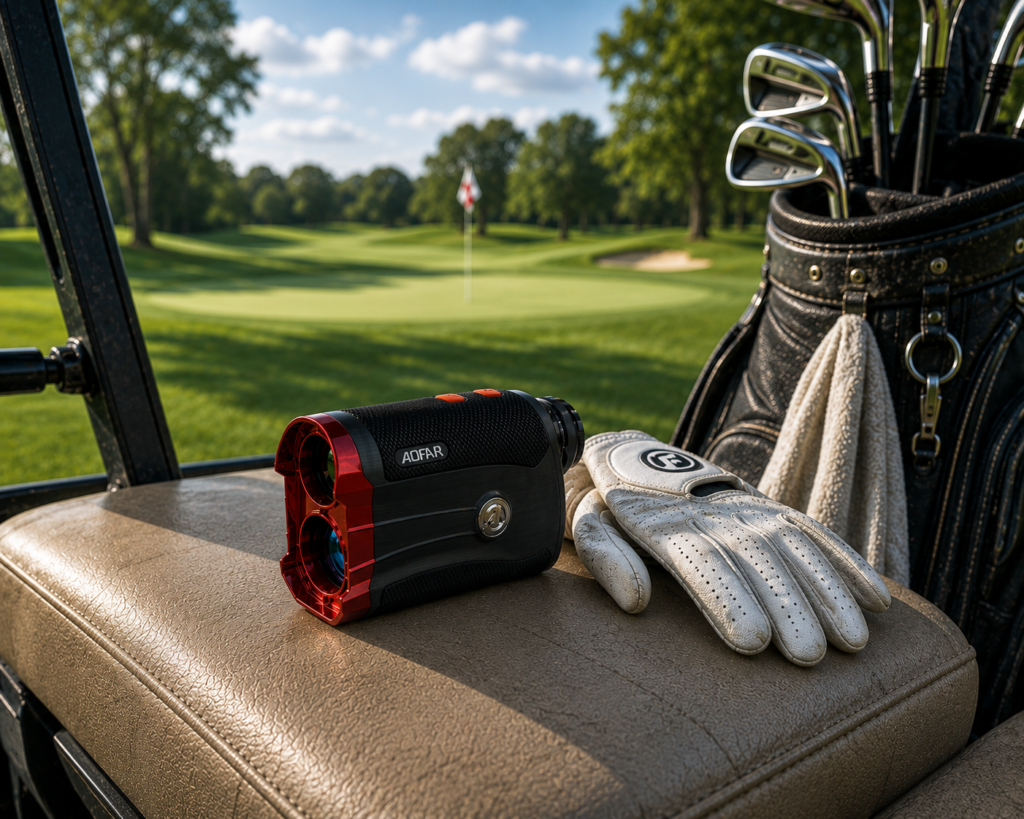
The AOFAR GX-2S was built for that third golfer. It is not the sharpest optical instrument in the category, the quickest to lock a flag, or the most technologically ambitious. Its appeal is simpler: it provides the yardage, stays attached to the cart, tolerates weather, and appears unusually willing to survive the careless moments that happen during actual golf.
The first two golfers often become the third golfer the moment the round begins.
How We Tested the AOFAR GX-2S
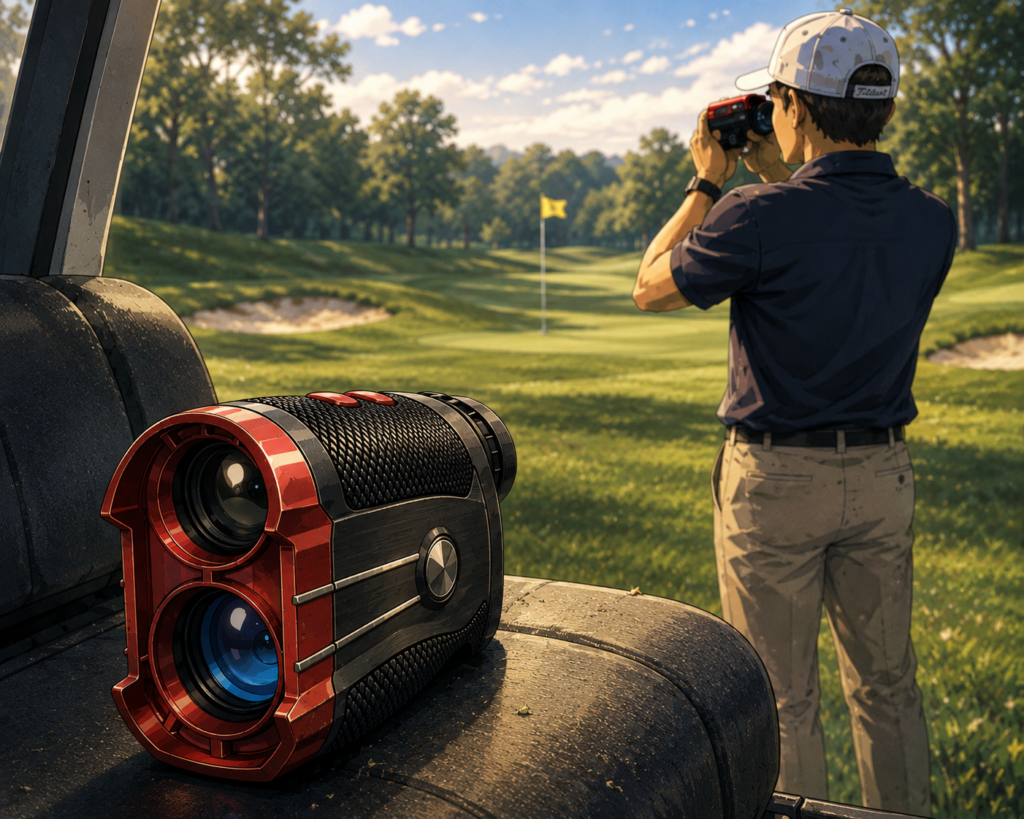
This review is based on four months of on-course use rather than a single afternoon on a practice range. During that period, the GX-2S was used for more than 1,000 activations, more than 200 logged distance checks, fourteen wet-weather rounds, repeated magnetic mounting, temperature changes, and twenty controlled drops from approximately cart-seat height onto concrete or asphalt.
The accuracy percentages cited below reflect repeated field checks and repeatability testing under ordinary playing conditions. They should be understood as real-world observations, not laboratory certification. The purpose was not to prove that the GX-2S can replace a survey instrument. It was to determine whether a recreational golfer can trust the number, use the device without interruption, and expect it to remain functional after months of normal abuse.
Testing period: Four months
Logged distance checks: 200+
Total activations: 1,000+
Wet-weather rounds: 14
Controlled drops: 20
Primary evaluation areas: Accuracy, acquisition, optics, slope operation, magnetic security, battery life, weather resistance and durability
Specifications at a Glance
| Specification | AOFAR GX-2S |
|---|---|
| Typical Price | USD $99–119 |
| Claimed Accuracy | ±1 yard |
| Reliable Flag Range in Testing | Approximately 285 yards |
| Magnification | 6x |
| Weight | 6.7 oz |
| Dimensions | 4.1 × 2.8 × 1.7 in |
| Battery | CR2 lithium |
| Observed Battery Life | Just over three months under aggressive weekend use |
| Water Resistance | IPX4 |
| Slope | Yes, with physical on/off toggle |
| Target Confirmation | Vibration lock |
| Cart Mount | Integrated magnetic mount |
| Warranty | Two years |
What It Actually Does on the Course
Accuracy and Target Acquisition
The GX-2S operates on a sensible premise: dependable accuracy from normal approach-shot distances matters more than optical elegance at dusk. The 6x magnification pulls the flag into view cleanly, the vibration confirmation makes the lock obvious, and the number appears without forcing the golfer into a second pre-shot routine.
Across more than 200 logged field measurements, the unit returned readings within one yard on 96% of normal-condition checks and 91% of checks made in more difficult visibility. Average acquisition time was approximately 0.7 seconds. Those results are not class-leading, but they are entirely usable.
That distinction matters. A premium device may acquire the target in 0.4 seconds instead of 0.7. On a specification chart, the difference is visible. During a fifteen-second pre-shot routine, it largely disappears.
On the course, those extra fractions of a second are usually noise.
Optics and Display Readability
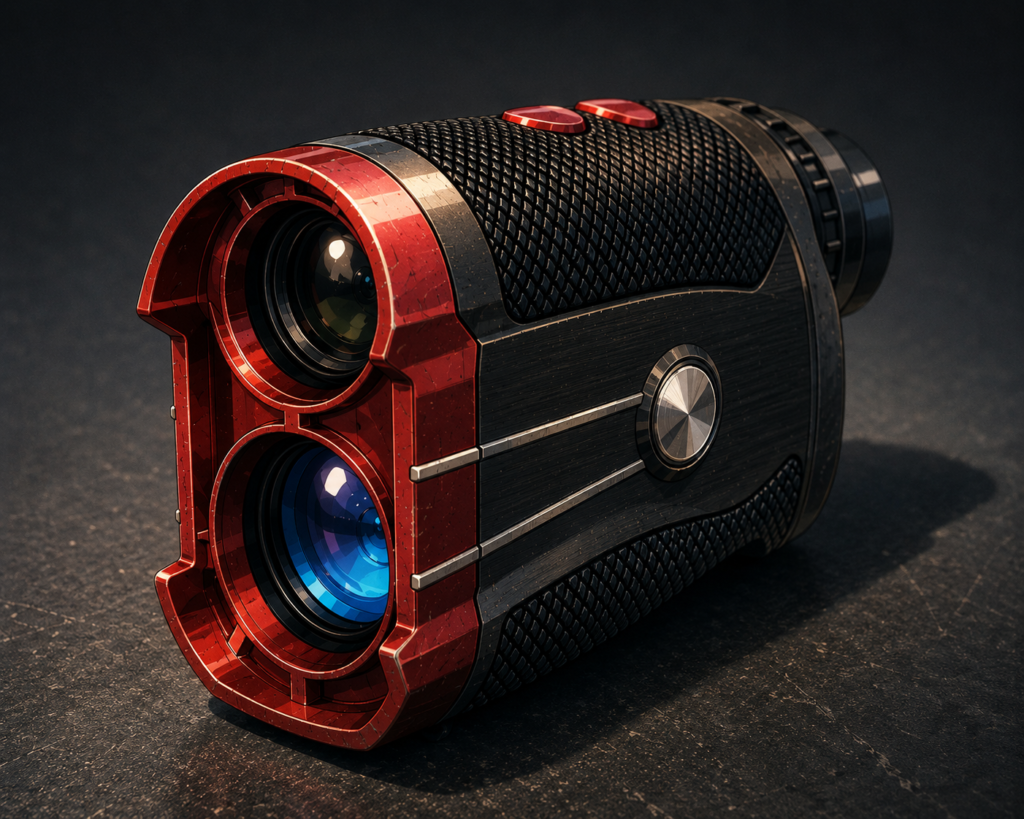
The optics are honest rather than luxurious. In daylight, the image is clear enough to identify the flag, bunker edge, tree line or larger target without strain. The dual red-and-black display remained readable in bright afternoon sun and in long late-day shadows. It adapts to the environment without demanding much thought from the golfer.
The limitations appear when the light deteriorates. Golfers who regularly play at dawn, near sunset, or in persistently dark conditions will notice the gap between this glass and a premium Nikon, Bushnell or Leica. The GX-2S does not erase that gap. It simply argues that most recreational rounds do not require it to.
Slope and Tournament Use
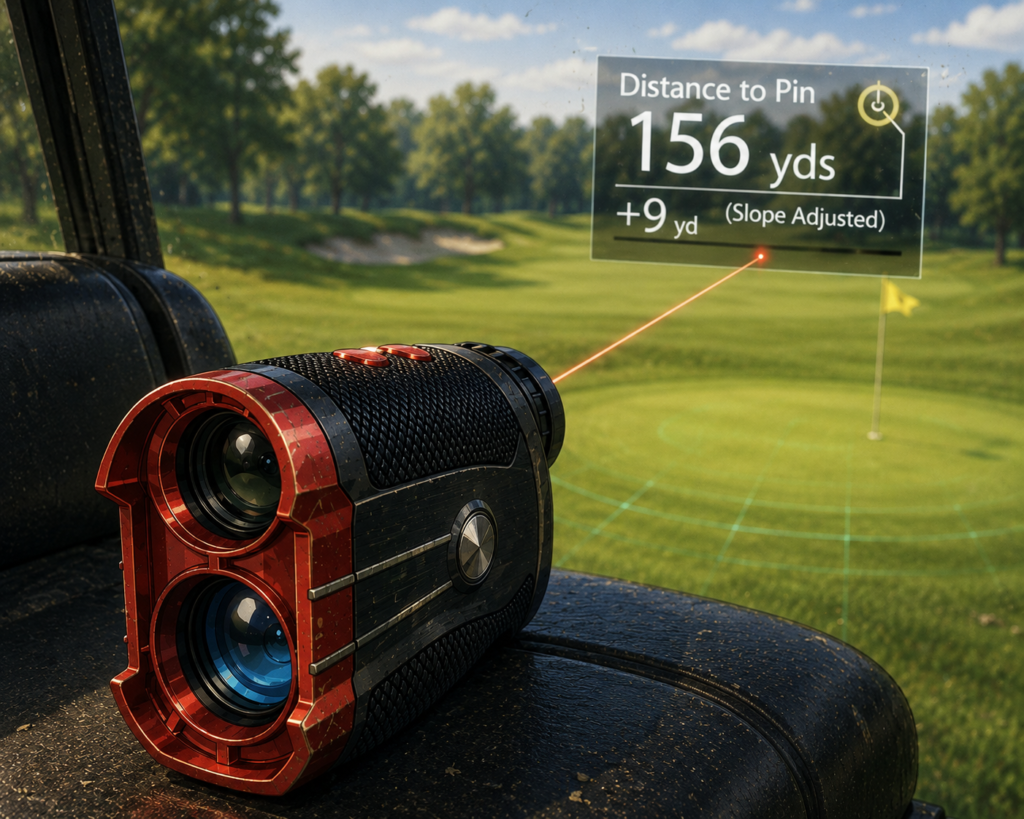
The slope function is controlled by a physical switch. That is less glamorous than an app or layered menu, but considerably better during a competition round. Slope can be disabled quickly, visibly and without searching through settings. With slope switched off, the device can be used where distance-measuring devices are permitted under the applicable competition rules.
The Magnetic Mount Becomes the Whole Review
Somewhere around the third hole of an August round, I stopped thinking about the rangefinder. Not because I had forgotten it, but because I had stopped worrying about it.
The GX-2S was attached to the steel frame of the cart with a final-sounding thunk. It stayed there through rough cart paths, abrupt stops, a post-birdie celebration that was more expressive than necessary, and a debate that required both hands and temporarily separated me from the cart.
When I returned, the rangefinder had not shifted or begun hanging at an angle. It was exactly where I had left it.
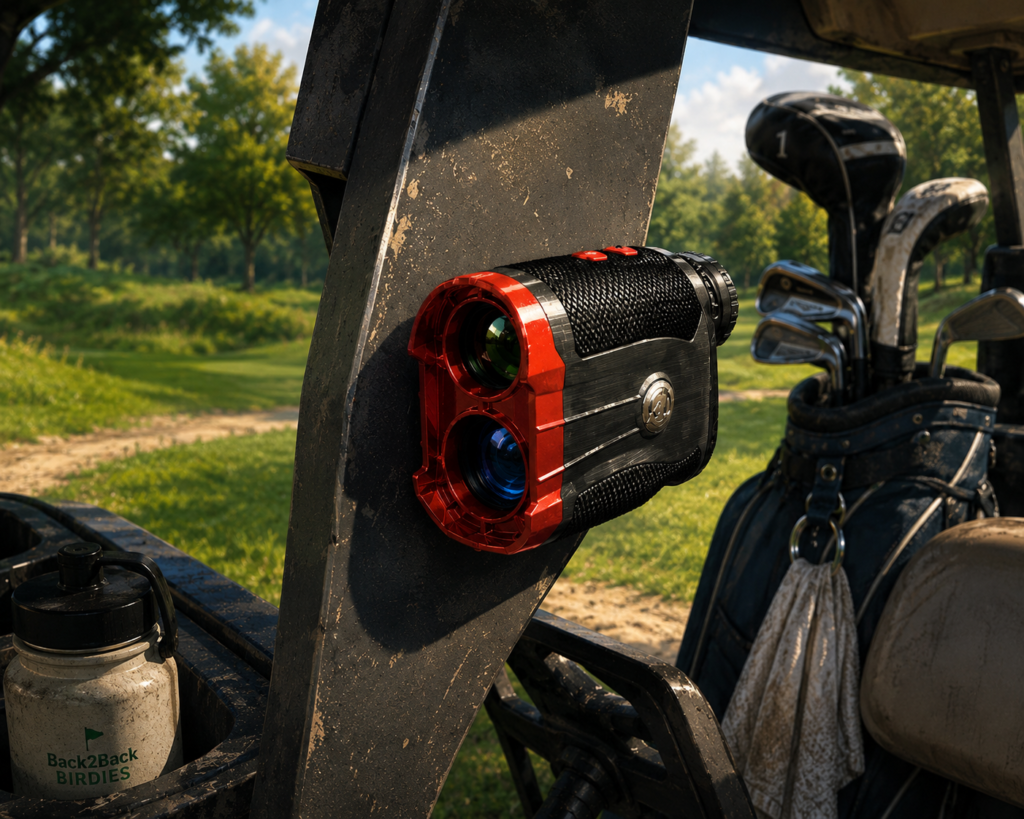
I stopped thinking about the rangefinder because I stopped worrying about it.
I have used more expensive rangefinders with magnetic mounts that gradually rotated, slid, or vibrated loose. The AOFAR’s mount remained secure across repeated use and rough terrain. That does not make the magnet an interesting accessory. It makes it the product’s defining advantage.
The best rangefinder is not useful when it is buried in a bag pocket, left in the cup holder, or lying somewhere behind the cart after the last hard turn. The GX-2S encourages the golfer to keep it visible and within reach—and then gives the golfer very little reason to check whether it is still there.
Durability, Weather and Battery Life
Four months, more than 1,000 activations, repeated moisture exposure and twenty controlled drops did not produce a functional failure. The rubberized housing accumulated ordinary cosmetic wear, including a small scuff from a cart-path impact, but the unit continued to acquire targets and return readings normally.
The battery compartment required re-seating twice after harder concrete impacts. That is worth reporting because durability is not the same as invulnerability. The cap did not break, and the unit did not fail, but the impacts were sufficient to disturb the seal. Anyone playing in sustained rain should confirm that the cap is seated properly.
The IPX4 rating proved sufficient for normal rainfall, morning dew and wet-cart conditions across fourteen rain rounds. This is not a submersible device, and it should not be treated like one. For ordinary wet-weather golf, however, it did what the rating promised.
The CR2 battery lasted just over three months during aggressive weekend use. The eight-second auto-shutoff is short enough to protect battery life without becoming irritating during normal play. Carrying one inexpensive spare removes most of the remaining concern.
Where the Compromises Live
Every rangefinder near this price makes choices. The GX-2S spends its budget on housing, magnetic security and uncomplicated operation. The compromises gather in predictable places:
- Optics: Adequate in daylight, visibly behind premium glass in poor light.
- Acquisition speed: Approximately 0.7 seconds rather than the 0.3–0.5 seconds common among faster premium units.
- Technology: No GPS overlay, Bluetooth connection, app integration or rechargeable USB-C battery.
- Refinement: The interface and physical design feel functional rather than luxurious.
These are real limitations. They are also limitations that many golfers will notice more while comparing specifications than while playing golf.
The golfer who begins before sunrise may reasonably choose better glass. The golfer who wants a rechargeable battery may prefer a different budget model. The golfer who wants GPS integration should not buy this device and hope to become less interested in GPS later.
But the golfer who wants a reliable number, a physical slope switch and a rangefinder that remains on the cart has little reason to apologize for choosing the GX-2S.
AOFAR GX-2S Versus the Alternatives
| Rangefinder | Why Choose It | Why Choose the AOFAR Instead |
|---|---|---|
| AOFAR GX-2S | Durability, magnetic security and straightforward operation | — |
| Flysocks 1200 | Lower price, rechargeable battery and strong budget value | The AOFAR feels more substantial and is the better choice when longevity matters most |
| Precision Pro NX10 | Better overall refinement, faster acquisition and stronger optics | The AOFAR costs less and makes a compelling case for golfers who value ruggedness over features |
| Nikon COOLSHOT 50i | Better optical experience and precision-focused design | The AOFAR is far less expensive and sufficient for ordinary daylight golf |
The comparison is not complicated. Choose the Flysocks when price and USB charging lead the decision. Choose the Precision Pro when you want the strongest balance of features and performance. Choose the Nikon when optical quality matters enough to justify the premium.
Choose the AOFAR when the rangefinder’s ability to tolerate ordinary golf matters more than winning the specification table.
Who Should Buy the AOFAR GX-2S?
Buy It If
- You treat golf equipment like sports equipment rather than display pieces.
- You value durability and reliability more than premium optics or connected features.
- You want a magnetic mount that stays secure on rough cart paths.
- You prefer a physical slope switch for quick tournament preparation.
- You want to stop thinking about the rangefinder during the round.
Skip It If
- You regularly play in genuinely poor light and need premium glass.
- You strongly prefer USB-C charging over a replaceable CR2 battery.
- You want GPS, Bluetooth or smartphone integration.
- You value luxury materials and optical refinement as much as basic function.
Best Alternative
The Precision Pro NX10 is the more complete rangefinder for golfers willing to spend more. It is quicker, more refined and optically better. The GX-2S earns its recommendation by asking less money and appearing more comfortable with rough treatment.
Final Verdict
7.5/10 — Durability Leader
A score of 7.5 does not mean the AOFAR GX-2S is an average product. It means the device is excellent at a narrower job than the category leaders.
The optical gaps are real. The 0.7-second acquisition is real. The absence of GPS, Bluetooth and premium slope algorithms is real. So is the magnetic mount that stays attached, the housing that survived repeated drops, and the uncomplicated operation that disappears into the round.
Its limitations are visible on a specification sheet. Its strengths become obvious after months of use.
The deeper question is what a golfer is actually buying a rangefinder to accomplish. If the answer is to obtain a dependable yardage without worrying about the equipment, the GX-2S delivers.
If the answer includes the pleasure of premium glass, connected technology, or carrying the same badge seen in a Tour caddie’s hand, the AOFAR will feel ordinary. It is ordinary. That is part of its point.
Mine now carries a small scuff from a cart-path drop. I have never noticed the scuff during a round. Most of the time, I do not think about the rangefinder at all.
That is the whole review, really.
Frequently Asked Questions
Clear answers to the most common questions golfers ask about the AOFAR GX-2S, including tournament use, battery life, water resistance and how it compares with its closest alternatives.
Is the AOFAR GX-2S legal for tournament play?
The GX-2S has a physical slope switch, allowing the slope function to be disabled clearly and quickly. When slope is switched off, the device provides straight-line distance only. Its use still depends on the competition’s applicable local rules regarding distance-measuring devices.
How does the AOFAR GX-2S compare with the Precision Pro NX10?
The Precision Pro NX10 is the more refined device, with better optics, quicker acquisition and a broader overall feature set. The AOFAR costs less and places greater emphasis on rugged construction and magnetic security. Choose the Precision Pro for the stronger all-around experience; choose the AOFAR when durability and price lead the decision.
What battery does the AOFAR GX-2S use?
It uses one CR2 lithium battery. During aggressive weekend use, the test battery lasted just over three months. Carrying one spare battery is inexpensive and prevents an unexpected interruption.
Is the AOFAR GX-2S waterproof?
It carries an IPX4 water-resistance rating, which is intended for splashing and rainfall rather than submersion. It performed normally across fourteen wet-weather rounds, but the battery cap should always be checked after a hard impact.
What is the AOFAR GX-2S best known for?
Its strongest qualities are the secure integrated magnetic mount, durable rubberized construction, simple physical slope switch and dependable performance at ordinary approach-shot distances.