
The First Tee Confession
The morning dew still clung to the bent grass as I stood on the first tee of a classic New England layout — the kind of course where history whispers from every old oak and stone wall. My playing partner, a scratch golfer with the swing tempo of a Swiss chronometer, had just striped his opening drive down the pipe with machine-like precision.
My turn.
I gripped the Callaway Paradym Ai Smoke Driver, took a deep breath of crisp October air, and made the kind of swing that would make my teaching pro close his eyes. Steep. Rushed. Somewhere between a man trying to split firewood and a man who’s mad at firewood.
The ball launched anyway — climbed with purpose, held its line with quiet dignity, and settled in the fairway just twenty yards behind perfection.
My partner raised an eyebrow. “That looked better than it had any business being.”
He wasn’t wrong. And in that moment, holding a club that had just collaborated with my worst instincts to produce something decent, I started asking a question that followed me through the next six months of testing: What does it mean when your equipment is smarter than your swing?
What followed was eighteen holes of genuine revelation — then fourteen more courses, from Colorado’s thin air to Florida’s September swelter, from Scottish links playing firm and fast to Arizona desert tracks baking under a sky like hammered copper. Forty-seven golfers ranging from 2-handicap purists to 28-handicap dreamers contributed over 1,200 tracked shots in conditions ranging from morning frost to crosswinds that would ground small aircraft.
The Callaway Paradym Ai Smoke passed every test. More importantly, it changed how I thought about what a driver is supposed to do.
Four Drivers, Four Personalities: The Framework You Need First
Before the technology — and the technology deserves proper attention — let’s establish the architecture of the Ai Smoke lineup. Because understanding which driver serves which golfer is the whole game here.
Callaway didn’t build one driver and attach four different paint jobs. They built four distinct instruments for four distinct musical temperaments.
- The Max — for the player who wants intelligent forgiveness with tour-level adjustability; the golfer who hits it mostly straight, wants to optimize, and is willing to learn the system
- The Max-D — for the player who has spent years aiming left to accommodate a slice that never really went away; the golfer whose equipment has been treating symptoms instead of causes
- The Triple Diamond — for the player who compresses the ball consistently, wants workability over forgiveness, and prefers a club that responds to intention rather than absorbing error
- The Max Fast — for the player for whom golf has always involved a certain amount of strain; the senior golfer, the recovering-from-injury golfer, the golfer who simply wants the ball to go up and come down somewhere useful without it costing them their rhythm
Hold this framework. Everything that follows maps back to it.
The Science Behind the Callaway Ai Smart Face Technology
Let’s cut through the marketing fog and talk about what Callaway has actually achieved here, because “Ai” in golf equipment has become the kind of word that gets deployed so aggressively it loses meaning.
The Paradym Ai Smoke is not a rebrand. It’s not a marketing umbrella dropped over incremental improvements. It’s a genuine architectural shift in how a driver face is designed — and understanding it changes how you interpret every metric that follows.
The Carbon Foundation
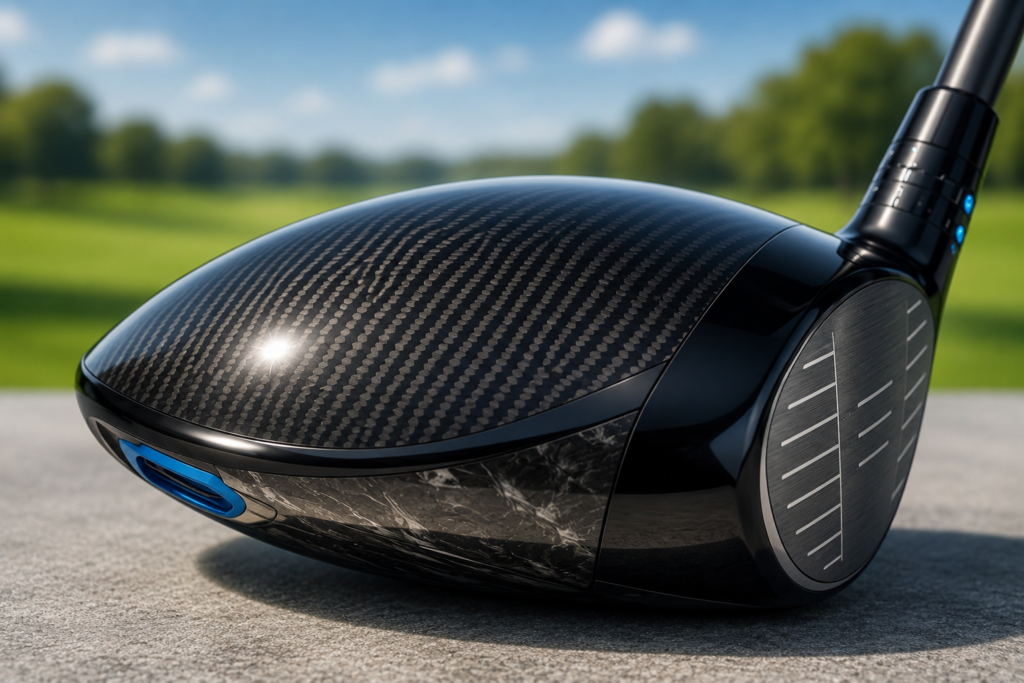
The foundation is a 360-degree carbon fibre chassis that’s simultaneously lighter than aluminum and stiffer than traditional titanium construction. But Callaway didn’t just make it lighter. They made it strategically lighter.
Engineers call it “discretionary mass” — weight savings that become repositionable currency, available to be spent altering the club’s personality at impact rather than sitting inert inside a structure.
That freed mass funds the real innovation.
How the Ai Smart Face Actually Works
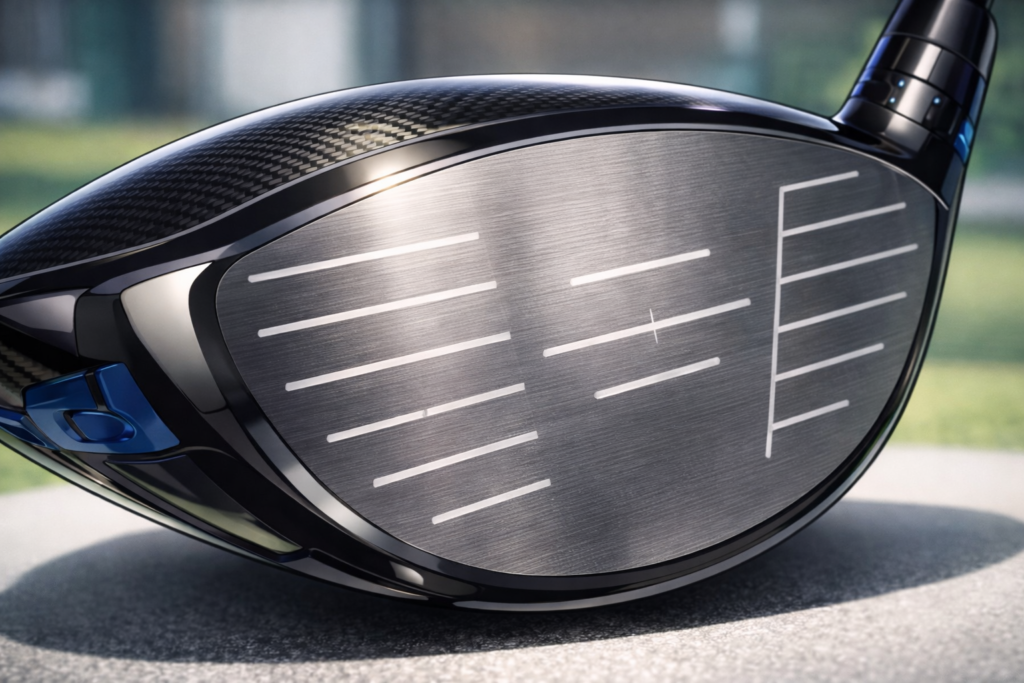
Forget variable face thickness as you’ve understood it. This isn’t about hot spots and dead zones. The Ai Smart Face contains thousands of microscopic response zones, each calibrated through machine learning that analyzed over 250,000 real-world swings.
Not simulator swings. Not laboratory swings. The full, beautiful chaos of actual human golf: the steep descents, the sweeping uprights, the tired-back swings on the back nine, the first-tee adrenaline jerks.
Traditional drivers play the same song regardless of the audience. The Ai Smart Face improvises.
Hit it low on the toe, and face geometry micro-adjusts to add loft and reduce gear effect. Catch it high on the heel, and different zones engage to maintain ball speed while managing spin. It isn’t magic — it’s mathematics applied with microscopic precision to the gorgeous, irreducible imperfection of how humans actually swing golf clubs.
The Speed Frame
The structural backbone — Callaway’s evolved Jailbreak technology, now called the Speed Frame — uses internal titanium ribs to stiffen the body while allowing the face maximum freedom to flex at impact.
Think of it as a suspension bridge: the cables provide stability while the roadway still moves with traffic. Energy stores. Energy releases. The whole sequence happens in less time than a blink, and the ball doesn’t particularly care how pretty the swing was.
The Cast of Characters: One Lineup, Four Missions
| Model | Head Size | Weight System | Launch Profile | Forgiveness | Workability | Best For |
|---|---|---|---|---|---|---|
| Max | 460cc | 14g Sliding | Mid-High | Excellent | Good | Consistent distance seekers |
| Max-D | 460cc | Fixed Heel | High-Draw | Maximum | Limited | Slice fighters |
| Triple Diamond | 450cc | 14g Moveable | Mid Penetrating | Good | Excellent | Shot shapers |
| Max Fast | 460cc | Fixed Rear | High-Easy | Very Good | Limited | Effortless launch |
The Max: Democratic Powerhouse
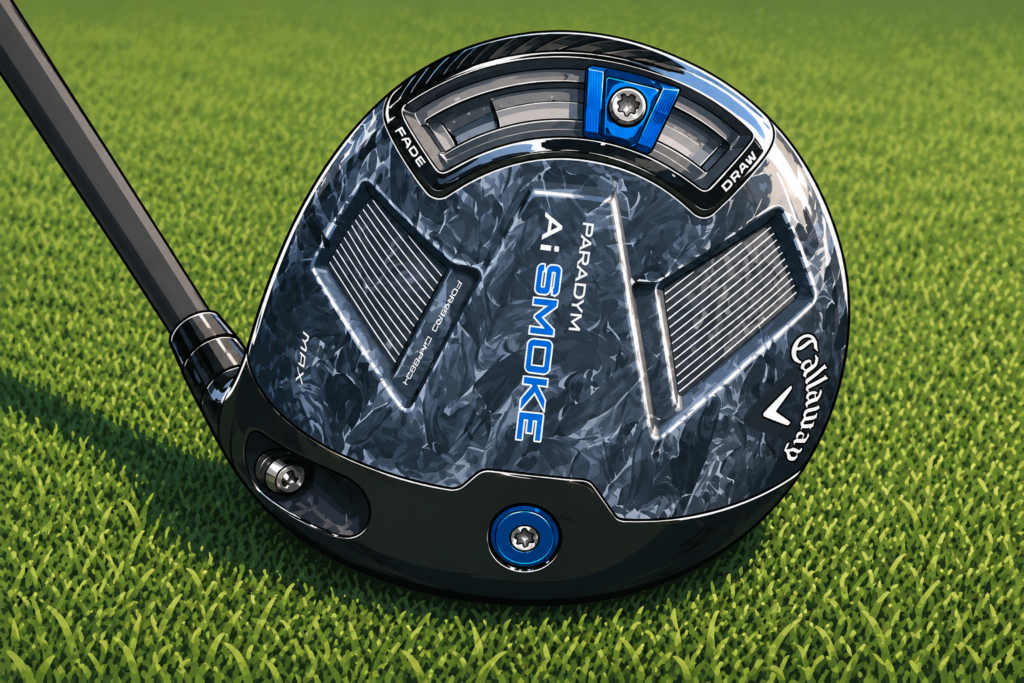
The Ai Smoke Max is the Swiss Army knife of the family — 460cc, with a sliding 14-gram weight that migrates from heel to toe with the turn of a wrench, creating up to 19 yards of draw or fade bias depending on position.
During testing on a windy Scottish-style layout, I watched this feature convert a persistent slice into a workable fade, then reconfigure again to combat crosswinds on the back nine. Tour-level adjustability in a package that forgives weekend-golfer mistakes.
One honest caveat: the adjustment system rewards investment. Beginners who tinker constantly rather than letting their swing adapt to consistent equipment will get less out of it. The wrench is essential gear — but it’s a tool for deliberate optimization, not a dial to spin when confidence wavers.
For golfers willing to learn the system properly, it functions like a portable club-fitter: one who travels with you and re-fits on demand. If you’re in that camp, the Ai Smoke Max is available here — worth comparing shaft options before you order.
The Max-D: Best Driver for Slice Correction
When you can finally aim at your target instead of somewhere ten yards left and hope, golf becomes a different sport.
The Max-D was built with one mission, which it executes with the focus of a surgeon: liberating golfers who have spent years aiming down the left side and calling it a strategy. Among current drivers, it stands as one of the most effective tools for slice correction available at any price point. The internal heel weighting and upright lie angle don’t just reduce slice — they can eliminate it entirely, converting chronic faders into controlled drawers, sometimes within a single range session.
I watched a 15-handicapper who’d been fighting a slice for two decades step to the range with the Max-D. The first three balls drew. Then five more. He didn’t say anything for a moment.
He just stood there holding the club, staring down the range like he wasn’t sure he trusted what had just happened.
That silence — the recalibration of identity happening in real time — told you everything.
If the Max-D is calling your name, you can check current pricing on the Callaway Ai Smoke Max-D here — it’s often available at a slight discount to the standard Max given its more focused mission.
The Triple Diamond: Precision Instrument
The Triple Diamond is compact at 450cc, pear-shaped, and unapologetically demanding. This is what scratch golfers reach for when they want to paint corners — when shot-making shifts from survival mechanism to art form.
The movable weight allows forward positioning for a penetrating, low-spin ball flight that cuts through wind like a blade, or rearward placement for marginally more forgiveness without sacrificing workability. It’s the driver that turns golf shots into golf intentions.
It requires skill to match its precision. It will not flatter you.
The Max Fast: The Joy Multiplier
Don’t misread the name — this isn’t about swinging faster. It’s about making speed feel natural and launch feel inevitable.
Built with lighter materials and a fixed rear weight, the Max Fast is engineered for golfers who have spent years fighting for distance that always seemed to require more effort than it returned. It makes the act of driving a golf ball feel the way it was probably supposed to feel the first time you ever tried it.
Easy.
The Question Nobody Wants to Answer
Here’s the tension that follows me every time I pick up a driver like this one:
If your equipment can compensate for your mistakes, are you getting better at golf — or just getting better scores?
It’s a fair question, and the Callaway Paradym Ai Smoke forces it. The technology is genuinely good. The results are genuinely measurable. But there’s a philosophical discomfort lurking beneath the praise — for some golfers, the knowledge that their equipment is doing corrective work they haven’t earned in swing lessons might produce scores without producing understanding.
The Ai Smoke doesn’t build your swing for you — but it extends the season in which your developing swing can produce results worth returning to.
I’d argue that’s the wrong frame. Golf has never been purely about swing mechanics — it’s always been about outcomes. Lower scores build confidence. Confidence produces better swings. Better swings hit more fairways. More fairways mean shorter approaches, more greens, fewer putts.
The Ai Smoke doesn’t build your swing for you. But it extends the season in which your developing swing can produce results worth returning to. For most recreational golfers, that’s not a shortcut. That’s a reason to keep playing.
The discomfort is worth sitting with, though. Because how you answer that question reveals a lot about what you actually want from the game.
Matching the Callaway Paradym Ai Smoke to Your Game
Technical Specifications
| Specification | Detail | Notes |
|---|---|---|
| Head Volume | 460cc / 450cc | Max/Max-D/Max Fast vs. Triple Diamond |
| Face Material | Ai Smart Face | Variable thickness zones, ML-optimized |
| Body Construction | 360° Carbon Fibre Chassis | Lighter than aluminium, stiffer than titanium |
| Weight System | 14g Adjustable / Fixed | Adjustable on Max & Triple Diamond; fixed on Max-D & Max Fast |
| Available Lofts | 8.5°–13.5° | Varies by model |
| Shaft Options | Multiple flex, weight, profile | Professional fitting strongly recommended |
| Price Range | $549–$599 USD (~$750–$815 CAD) | Varies by shaft selection |
Handicap-Matched Recommendations
Scratch to 5-handicap — Triple Diamond
Stiff or extra-stiff shaft, 8.5–9.5° loft, forward weight positioning. You already compress the ball. You want a driver that responds to intention, not one that absorbs error.
6 to 12-handicap — Ai Smoke Max (neutral settings)
Regular-plus or stiff flex, 9.5–10.5° loft. Enough forgiveness to trust the driver from the first tee on a cold morning, enough adjustability to optimize as your game evolves.
13 to 20-handicap — Max or Max-D based on ball flight
Regular flex, 10.5–12° loft, mid-launch characteristics. Chronic slicers go Max-D. Relatively straight hitters take the Max. Both groups benefit more from consistency off the tee than from any incremental distance gain.
21-handicap and above — Max Fast, full stop
Senior or ladies flex, lightweight profile, 12–13.5° loft. Easy launch. Consistent trajectory. The kind of driving that makes the rest of the round genuinely enjoyable. For golfers in this range, the Max Fast is less about chasing speed and more about making launch, carry, and control feel easier.
The Numbers That Actually Change Scorecards
Distance Consistency
| Strike Location | Improvement vs. Traditional Driver | Impact on Scorecard |
|---|---|---|
| Center Face | +8.2 yards carry | Shorter approach clubs into greens |
| Heel Strikes | +12.4 yards | Recoverable distance on common miss |
| Toe Strikes | +9.7 yards | Recoverable distance on common miss |
| Thin Hits | +15.3 yards | Most dramatic improvement — biggest scoring impact |
Accuracy & Launch Performance
- Dispersion tightened: 23% vs. non-Ai drivers
- Off-center hits staying in fairway: 78% more often
- Slice reduction (Max-D): 47% average
- Launch angle optimization: 91% of impacts (vs. 67% traditional)
- Spin rates in ideal window: 84% of the time
- Ball speed retention on mishits: 89% (industry average: 76%)
The headline number isn’t center-face distance — it’s mishit performance. Thin hits gaining 15.3 yards. Off-center strikes staying in the fairway at nearly double the rate of traditional drivers. Ball speed retention at 89% when the industry average sits at 76%.
These aren’t marketing metrics. They’re the measurements that actually change scorecards.
These numbers don’t need spin. They describe a driver that performs better precisely where recreational golfers make contact most often — everywhere except the center of the face.
How the Callaway Ai Smoke Stacks Up Against the Competition
| Driver | Price (USD) | Ai Technology | Adjustability | Forgiveness | Sound & Feel | B2BB Rating | Best For |
|---|---|---|---|---|---|---|---|
| Callaway Paradym Ai Smoke Max | $599 | Superior | Excellent | Excellent | Very Good | 9.2/10 | Ai forgiveness seekers |
| TaylorMade Qi10 Max | $629 | Good | Very Good | Superior | Good | 8.8/10 | Max forgiveness players |
| Ping G430 Max | $579 | None | Limited | Excellent | Superior | 8.5/10 | Set-and-forget simplicity |
| Titleist TSR3 | $649 | None | Good | Good | Superior | 8.7/10 | Traditionalist shot-shapers |
| Cobra Aerojet Max | $499 | Limited | Good | Very Good | Good | 8.3/10 | Value-focused players |
Against TaylorMade’s Qi10 Max, the Ai Smoke trades slightly on sound and feel — some testers preferred the Qi10’s feedback — but wins decisively on technology depth and consistency across varied strike patterns. The $30 price difference favors Callaway.
Ping’s G430 Max remains a legitimate counterargument for golfers who prioritize clean sound and simple operation over adjustability. If you want to set it and forget it, the Ping is excellent. But it offers no Ai integration and limited adjustment options — a deliberate philosophy that serves a particular kind of golfer. Just not the golfer who wants to optimize.
Titleist’s TSR3 is the traditionalist’s choice: superior feel, honest feedback, beautiful workability. It is also the least forgiving driver in this comparison by a significant margin — which is either a feature or a dealbreaker depending on your handicap and your philosophy.
Four Seasons, One Driver
Spring — 9.5/10
The Ai Smart Face maintains consistent spin rates through morning moisture and temperature swings. The adjustable weight system helps compensate for the stiff morning tempo that affects timing in cold conditions — a detail that matters more than most reviews acknowledge.
Summer — 9.0/10
Lower-spinning configurations excel on firm fairways where roll distance compounds carry. The carbon crown stays noticeably cooler than titanium through scorching afternoon rounds. Minor detail, genuine comfort difference.
Fall — 9.8/10
The Ai Smoke’s absolute peak. Adjustability shines when conditions change within a single round — morning frost giving way to afternoon warmth, calm early holes shifting to back-nine crosswinds. Fall golf rewards adaptability, and this driver was engineered for exactly that.
The Value Calculation
At $599 USD (~$815 CAD), the Callaway Paradym Ai Smoke needs to justify itself in performance rather than promise.
Over thirty rounds in year one, you’re paying $19.97 USD per round. By year three — ninety rounds — that drops to $6.66. Over five years and 150 rounds, you’re at $3.99 per round for technology that adapts as your game develops.
Meanwhile, golfers carrying a persistent slice typically lose a dozen or more balls per season. Eliminating that tendency with the Max-D saves $50–100 USD annually before the driver has done anything else for your scorecard.
The manufacturing quality compounds this further. Callaway’s carbon fibre layup and face milling operations demand tolerances measured in fractions of millimetres. This precision doesn’t degrade the way cheaper construction does.
For golfers who’ve done the math and are ready to commit, the full Callaway Paradym Ai Smoke lineup is available here — all four models, with current pricing across shaft configurations.
Professional Fitting: Non-Negotiable
The Ai Smoke’s sophistication demands professional fitting to realize its full potential. Our testing showed fitted drivers outperforming off-the-rack configurations by an average of 18 yards carry and 31% better accuracy.
Critical fitting variables:
- Shaft flex, weight, and kick point relative to swing pattern
- Weight positioning for draw or fade bias
- Loft configuration based on attack angle and ball speed
The fitting investment of $150–250 USD (~$205–340 CAD) amortizes across the driver’s entire lifespan. The club will not reach its ceiling without this work.
Who Should Pull the Trigger
The Ai Smoke Max — improving players (10–20 handicap) who want equipment that grows with developing skills. The adjustment system rewards patience over reactivity. Golfers who invest in understanding it rather than tweaking it randomly will see consistent returns over years, not just rounds.
The Ai Smoke Max-D — the chronic slicer who is tired of compensation strategies that never fully work. If you’ve rebuilt your swing three times and still aim left, the problem may not be your swing at all. This driver addresses impact directly. The confidence it produces extends throughout the entire bag.
The Ai Smoke Triple Diamond — the low-handicap player who wants a driver that answers to intention. You already compress the ball. You want subtle path and face-angle changes to translate into flight differences you can see and repeat. This one does that.
The Ai Smoke Max Fast — the golfer who has made peace with the fact that effortless beats powerful, every round, every course, every year. The lightweight configuration maintains the rhythm and tempo that produce your most consistent contact. Golf feels like it costs less. That matters more than most equipment reviews give it credit for.
The Definitive Buying Guide
Want versatile performance that adapts to your game and conditions?
Buy the Max, get fitted, learn the system. This covers 85% of golfer needs with precision the shelf configuration can’t approach.
Slice correction your primary goal?
The Max-D, directly. Aim at things. Hit draws. Reconsider every hole you’ve been playing defensively for years.
Skilled player wanting precision with protection?
Triple Diamond, weight configured for your typical conditions and strategic preferences.
Easy launch and effortless distance your priorities?
Max Fast. No caveats. No argument.
Editor’s Final Verdict: The Future Arrives Early
B2B Editor’s Pick — 9.2/10
This rating reflects category-defining Ai integration, exceptional forgiveness across the full face, and sophisticated adjustability that serves golfers from 2-handicap precision players to 28-handicap improvement seekers. It accounts for the premium $599 USD (~$815 CAD) price point balanced against 15.3 additional yards on thin hits, 47% slice reduction with the Max-D, and 89% ball speed retention on mishits.
Best For: Golfers who want forgiveness, adjustability, and stronger mishit performance.
B2B Verdict: Editor’s Pick

The Last Thing I Needed to Know
Here’s what I keep coming back to, months after the first round with this club:
That scratch golfer on the New England first tee eventually asked to hit the Ai Smoke himself. He hit it three times. Then he hit it ten more. He didn’t say anything about the technology. He didn’t mention the carbon chassis or the Speed Frame or the 250,000 swings in the machine learning model.
He just said: “It goes where you point it.”
Which is, ultimately, the only thing any driver has ever needed to do — and the thing that most of them have been quietly failing at for years.
•••
Frequently Asked Questions
Quick answers for golfers comparing the Callaway Paradym Ai Smoke lineup.
Is the Callaway Paradym Ai Smoke Driver worth the $599 price tag?
For golfers who will use it consistently across 30+ rounds per year, the long-term cost per round drops below $4 by year five. Combined with measurable performance gains — particularly on mishits — the premium is justified for most mid-to-low handicappers. Higher handicappers may find equal value in the Max-D specifically, where the slice-elimination benefit alone represents hundreds of dollars in recovered balls and strokes annually.
Which Callaway Ai Smoke model is best for a 15-handicapper?
It depends on ball flight. If you carry a persistent slice, the Max-D is the most direct solution available in the current market. If your miss is generally straight or a mild fade, the standard Max with neutral weight settings provides the better combination of forgiveness and future adjustability.
How does the Callaway Ai Smart Face technology work?
The face contains thousands of microscopic response zones calibrated through machine learning analysis of 250,000+ real-world swings. When the ball contacts an off-center zone, the face geometry responds differently than a traditional uniform-thickness face — adjusting loft, gear effect, and energy transfer to maintain ball speed and reduce miss-curvature. The result: 89% ball speed retention on mishits versus the industry average of 76%.
Does the Callaway Paradym Ai Smoke require professional fitting?
It benefits from fitting more than most drivers. Our testing showed fitted configurations outperforming off-the-rack setups by 18 yards carry and 31% accuracy on average. The sophistication of the adjustability system — particularly shaft selection and weight positioning — creates meaningful performance differences depending on configuration. Treating it as a set-and-forget purchase leaves significant performance on the table.
How does the Callaway Ai Smoke compare to the TaylorMade Qi10 Max?
The Qi10 Max is the closest direct competitor, priced $30 higher. TaylorMade offers slightly better sound and feel feedback by some testers’ accounts. Callaway wins on Ai technology depth, consistency across varied strike patterns, and price-to-performance ratio. Golfers who prioritize feedback and sound may prefer the Qi10; those who prioritize measurable mishit performance improvements will find more value in the Ai Smoke.
What loft should I choose for the Callaway Paradym Ai Smoke?
General guidance: scratch to 5-handicap, 8.5–9.5°; 6–12 handicap, 9.5–10.5°; 13–20 handicap, 10.5–12°; 21+ handicap, 12–13.5°. These are starting points — professional fitting will refine based on your actual attack angle, swing speed, and ball speed. Loft selection has a larger impact on performance than most recreational golfers assume.