
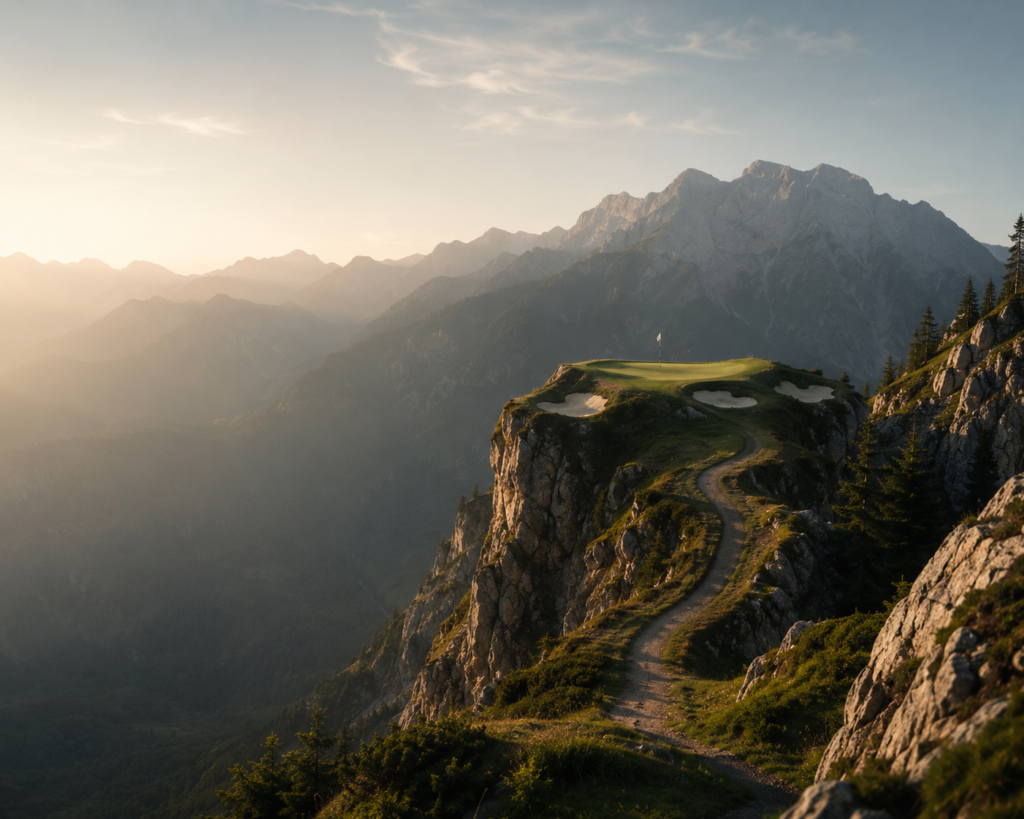
There is a version of my golf swing that exists only in my body, and I have been chasing it for something like thirty years. I don’t know what it looks like. I’ve never seen it, not once, not on video, not in a mirror. I know what it feels like — a full, unhurried turn, everything arriving in order, the club dropping into the slot on the way down like it was poured there instead of swung, the transition patient in a way nothing else in my life has ever asked me to be patient. I have felt that feeling maybe a dozen times in thirty years. I have chased it for all thirty.
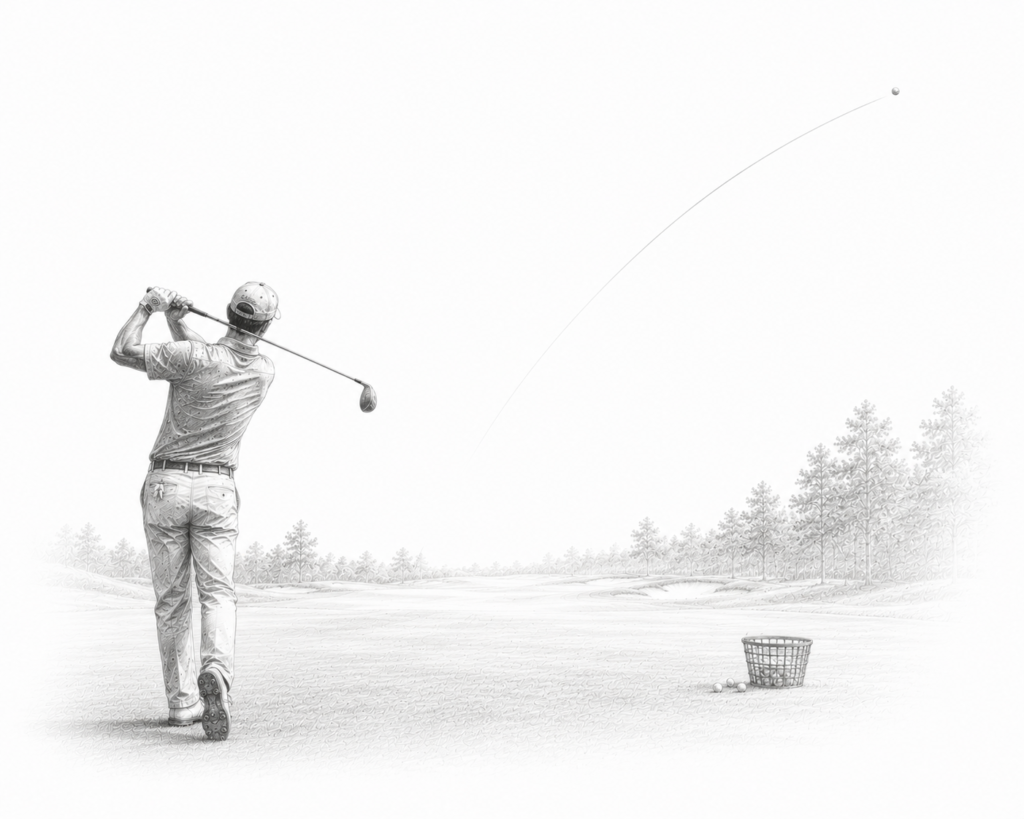
They call it the Big Right Miss for a reason, and if you’ve never had one, consider yourself lucky, because it isn’t really a miss — it’s closer to a relationship. Mine starts in the transition, some small betrayal at the top of the backswing where my upper body decides it’s tired of waiting for my hips and lunges at the ball first, and the club comes down and across instead of down and through, and the driver face — through no fault of its own, really, it’s just doing what an open face does at a hundred miles an hour — starts the ball down the middle of the fairway, right where it’s supposed to go, right where I told it to go, and then just keeps going, drifting, bending, exiting stage right into whatever’s waiting over there, which is rarely anything good. I have paid four different swing coaches to fix this. I have watched my own downswing in slow motion enough times that I sometimes see it when I’m not even looking at a screen, a small ghost-reel playing behind my eyes. I have hit approximately one thousand slow-motion transition drills in my basement with no ball at all, just the feeling, just trying to teach my body the patience my body has never once, in fifty-some years on this earth, been naturally inclined to have.
And here’s the part that should be a punchline but somehow never quite lands as one: it works. For a round, sometimes a round and a half if I’m lucky and nobody’s watching too closely, I own it. I stand on the tee and there’s a specific stillness in my hands right before I take the club away — no grip pressure to speak of, no thought about the transition at all, just a body that suddenly, temporarily, remembers how to do the thing it’s been trying to learn for thirty years. The miss goes quiet, and I start to believe — really believe, the way you believe things you should probably know better than to believe by now — that I’ve finally solved it. And then, without fail, a round and a half later, I make the same transition mistake I made in 1994, and the ball starts on line, briefly, just long enough to get my hopes up, before it takes a hard turn right and keeps turning, climbing as it goes, like gravity is the only thing standing between that golf ball and low orbit. I stand there with a feeling I’ve had a hundred times before, which isn’t quite frustration and isn’t quite defeat. It’s closer to recognition. Oh. There you are. I wondered when you’d be back.
Maybe golf was never going to let me finish. Maybe the whole appeal, underneath the frustration, was that it wasn’t going to — and maybe that’s what challenge actually is, once you’ve lived with it long enough. Not an obstacle in front of the thing you love. The thing itself.
FIELD NOTES
Here’s a strange thing about golfers that I’ve spent years failing to explain to anyone who doesn’t play: we are, as a species, the only people I know of who willingly drive back to the exact place that has hurt us the most, on purpose, year after year, and call it a good time.
Nobody does this anywhere else in life. You don’t rebuild your house on the same slope that flooded the last one. You don’t reinvest in the business that bankrupted you, or ask the doctor who missed the diagnosis for a second opinion out of loyalty. Most reasonable people, once burned, route around the thing that burned them, quietly, permanently, without a second thought about what they’re giving up by avoiding it. Golfers are not reasonable people, not about this. We have a specific hole — every serious golfer I’ve ever met has one — that has taken more balls, more strokes, more of our dignity than any other eighteenth of any other course we’ve ever played, and instead of avoiding it, we tee it up there again on purpose, sometimes eagerly, the way you’d greet an old rival you respect more than you’ll ever admit out loud.
The swing flaw follows me everywhere, uninvited, whether I want it there or not — it’s a challenge that finds me. This is different. This is a challenge I have to go looking for, deliberately, the way you’d seek out a person specifically because they once told you the truth when it cost you something to hear it. I have to get in a car, drive to a specific piece of land, and stand on a specific tee box, just to give it another chance to do to me what it always does.
I have one of those holes. It’s a par 4, and it has never once, in fifteen years, let me leave with anything I’d call dignity.
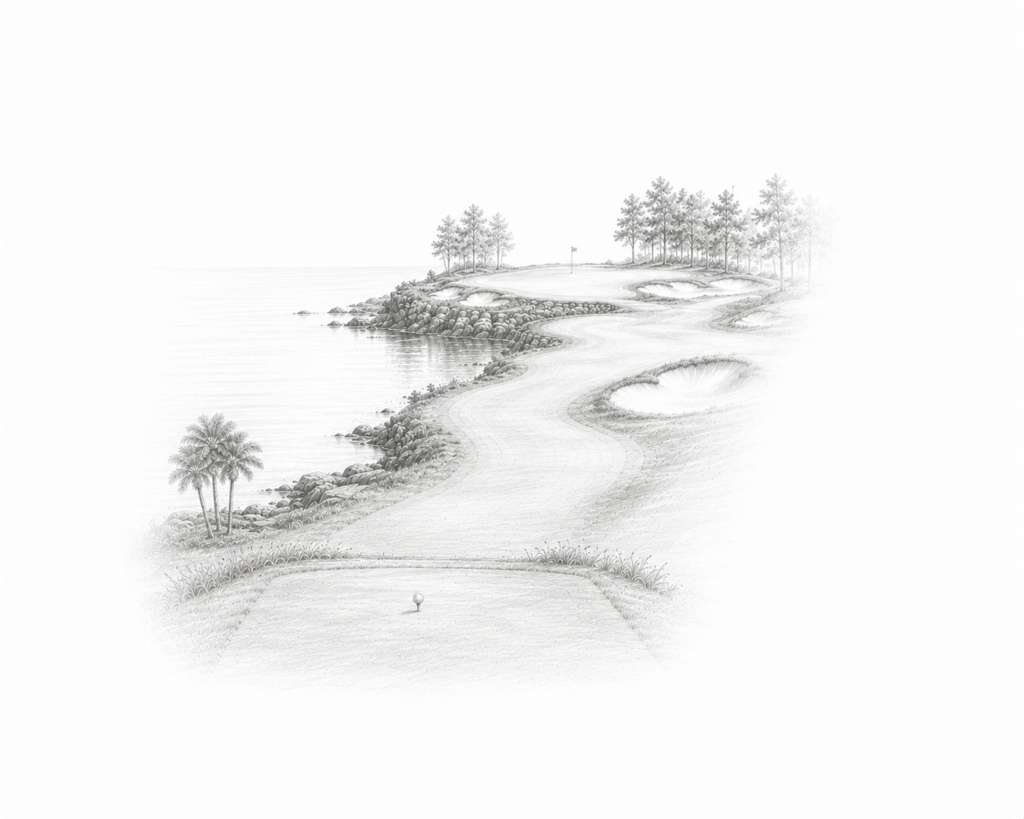
There’s a hole I’ve been playing for fifteen years that I’m convinced was designed by someone who hated me personally, despite the fact that it existed before I was born and has beaten better golfers than I’ll ever be. It’s a par 4, long enough that length alone would be a fair fight — over 450 yards from the tees I play — except length was never going to be the problem. The problem starts before you’ve even seen where the ball is supposed to go.
The tee shot is blind. You stand there aiming at a gap in the trees that you’ve memorized rather than a target you can actually see, trusting a line you can’t verify until it’s too late to do anything about it. Out of bounds waits down the left, close enough that a ball with even a hint of a pull is gone before it lands. The right is worse in a different way — woods first, then water behind the woods, so that even a ball that survives the trees can still find its way to a lie you’ll be lucky to advance fifty yards. Bunkers guard both sides of the fairway in between, in case the trouble on either edge wasn’t sufficient encouragement to hit it dead straight. And the shot this hole actually wants — not the shot I naturally hit, the shot it wants — is a tight draw, a shape my hands have rarely trusted under pressure, because my hands, as established, have their own ideas about which direction the ball should ultimately travel.
Survive all of that, somehow, and you’re rewarded with an approach shot that doesn’t relax so much as change its method of attack. The green sits at an angle to the fairway, so even a decent tee shot leaves you an approach that has to fight the whole hole’s geometry instead of working with it. It’s long, it’s guarded by bunkers on both sides, and the water that ate your tee shot’s careless cousin down the left doesn’t stay down the left — it crosses back in front of the green, too, so the one club selection that feels safe is often the one that leaves you short and wet. And if, by some combination of skill and mercy, you find the putting surface, the hole has one more test waiting: a green with three distinct tiers, meaning the shot you were relieved to finally hit onto dry land might leave you forty feet away with two full elevation changes between your ball and the hole, a putt that isn’t really one shot so much as three separate decisions about speed, each of which can still go wrong on its own.
FIELD NOTES
I have made bogey on this hole more times than I’ve made par. I have made triple more times than I’d like to admit out loud to anyone who wasn’t standing there with me. I have stood on that blind tee box feeling something close to dread — not exaggerated dread, not performed dread, the real kind, the kind your stomach knows about before your brain catches up — and I have hit that tight draw maybe twice, clean, in fifteen years, and both times I remember exactly where I was standing when it happened, the way you remember where you were for news that mattered.
And every single time I play that course, I walk to that tee on purpose. Nobody makes me. There’s no penalty for laying up shorter off the tee, no rule requiring the draw, no law of golf that says I have to keep trying the same shot that has failed me for a decade and a half. I could play safer. I choose the hole exactly as it’s designed, every time, and I genuinely could not tell you why, except that some part of me needs to know, every single round, whether this is finally the day I solve it — and the not-knowing, weirdly, is most of the reason I keep coming back. A hole I’d already beaten wouldn’t be worth the drive. This one might be, every single time, right up until it usually isn’t.
Walking off that green is its own particular ritual, whatever the scorecard says. On the bad days, there’s a specific flavor of surrender in it — not anger anymore, not at this point in the relationship, just a tired kind of acceptance, the way you’d nod at a verdict you half-expected before you ever walked into the room. On the rare good days, the ones where the draw actually shows up and the ball actually finds the fairway, there’s a satisfaction in it that feels disproportionate to one golf shot, the kind of relief that makes you want to tell someone, anyone, even though you already know they’ll never fully understand why one tee shot on one par 4 means this much to you. I’ve never once walked off that green feeling nothing at all. That might be the whole reason I keep going back.
The hole doesn’t know my name. That’s part of what makes it bearable, even lovable, in its own punishing way — whatever dread it produces is between me and a piece of land that has no opinion of me whatsoever. Nobody’s watching when I stand on that blind tee box except whoever I brought with me that day, and even they’ve usually seen me fail there enough times that it’s stopped being interesting to them. The challenge is real, but it’s private. It’s just me, arguing with geography.
There’s a different kind of pressure that requires an audience, and it’s a meaner one, because it isn’t the course judging you anymore. It’s people who’ve known you for fifteen years, who’ve watched every version of your swing come and go, who will remember what you do next longer than you’d like, and who are standing close enough to see your hands shake if they’re going to shake. A golf course can’t hold a grudge or tell a story about you at dinner afterward. Your friends can do both.
We invented ours on purpose. No trophy, no money, nothing at stake that would matter to anyone outside our group — and somehow it’s the hardest golf any of us play all year, because the stakes were never really about the golf. They were about what fifteen years of history does to a ten-foot putt.
Fifteen years ago, twelve of us made up a tournament that doesn’t exist anywhere else in the world. No sanctioning body, no trophy worth more than the cost of engraving, no prize that would mean anything to a single person outside our group. We named it something half-serious that I won’t bother explaining here, because the name was never the point. The point was that we agreed, without ever quite saying so out loud, to make one round a year matter more than golf has any business mattering.
It works. That’s the strange part. It shouldn’t work — there’s nothing at stake, nothing on the line, nothing a rational person would call pressure — and it is, without exception, the hardest golf any of us plays all year.
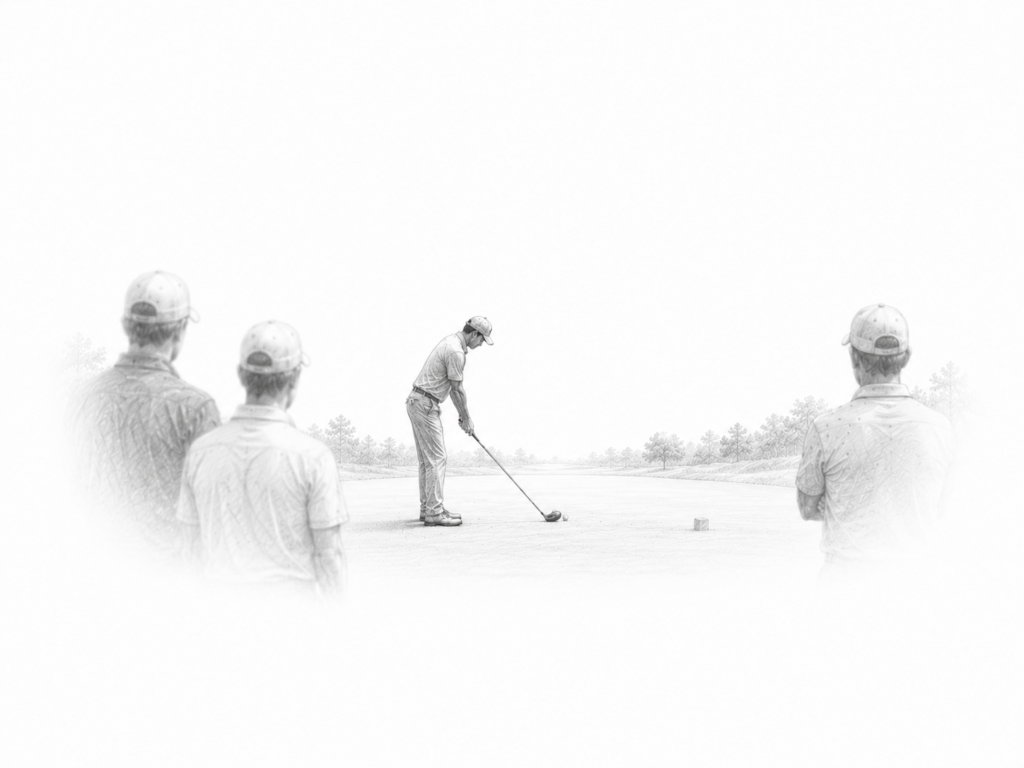
It starts on the first tee, before a single shot has been struck. Eleven other guys who’ve watched every version of my swing for a decade and a half are standing there with me, and I can feel my own pulse in my hands in a way I never feel it on a random Tuesday alone. Some years I’ve stepped up to that tee and hit a drive that traveled three hundred yards dead straight, the kind of shot that made everyone go quiet for a second before somebody said something about how unfair that was, and I remember every one of those drives with a clarity I don’t have for shots that mattered less. Other years — more years, if I’m honest — I’ve stood on that tee, with the same eleven guys, and hit a shot so short and so crooked that it wasn’t really a golf shot anymore, it was closer to a confession. Same swing. Same club. Same crowd of witnesses. The only thing that changed was whether my hands trusted me that particular morning, and my hands, it turns out, do not care how many times I’ve hit that tee shot before. They only care whether they think anyone’s watching.
FIELD NOTES
There’s a version of this pressure that shows up late, too — not on the first tee, but on the eighteenth green, which somehow always seems to be where these rounds decide to reveal themselves. One year I stood over a ten-foot putt, dead straight, nothing tricky about the read, needing only a par to halve the match, and I remember the specific quality of silence in that moment — not peaceful silence, the other kind, the kind where you can hear your own heartbeat competing with the wind. I made it. Clean, center-cut, the kind of putt that looks routine on video and felt like defusing something when you’re standing over it. Another year, different circumstances, needing a birdie instead of a par on that same green to halve a different match, I did not make it. The putt slid by the right edge, the way putts do when you’ve hit them a fraction too tentatively because some part of you already decided, before you’d even struck it, that this wasn’t going to be your year. I can still see that putt more clearly than I can see putts I made in tournaments that actually counted for something.
I used to think pressure required something to lose. I’ve come to think it only requires something to care about, and that we’ll invent stakes out of thin air if caring about something enough is all we’ve got.
FIELD NOTES
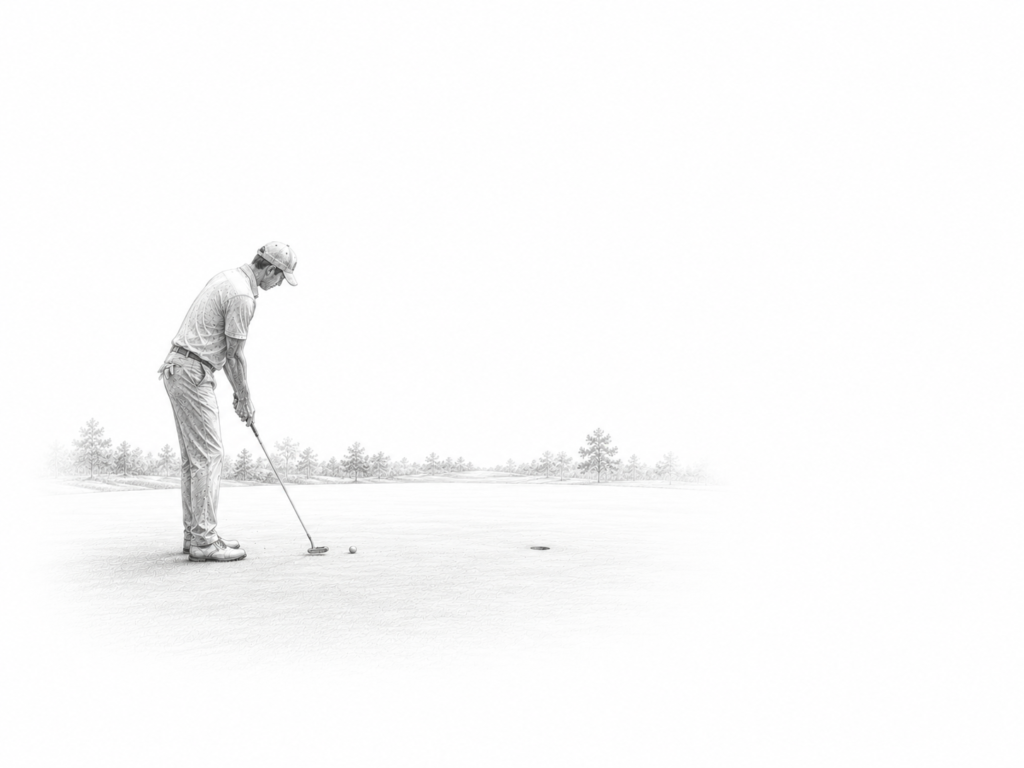
None of this required stakes. That’s what I keep coming back to. Nobody’s mortgage was on the line. No sponsor was watching. We built the whole apparatus of pressure ourselves, out of nothing but fifteen years of showing up and caring, and it turned out to be real anyway — real enough to make my palms sweat on a first tee shot in front of eleven men who’ve seen me hit that exact shot successfully a hundred times before. Real enough that a ten-foot putt on a Saturday afternoon with nothing but pride on the line can still, even now, make my hands shake exactly the way they’d shake if there were actual money on the table.
That might be the strangest thing about this game — it doesn’t need a trophy to ask everything of you. It just needs eleven friends, fifteen years, and a green you’ve all walked toward before, wondering, every single time, who’s going to be the one whose hands give them away.
Every challenge I’ve described so far, if I’m honest, has been one I chose. I chose to keep fighting the same swing flaw instead of making peace with a safer, uglier one. I chose to keep driving back to that hole instead of routing around it the way a reasonable person would. Twelve of us chose, deliberately, to build a tournament with actual stakes hiding inside a stakeless afternoon. Every one of those challenges, underneath the difficulty, came with an exit I never took.
There’s one kind of challenge in this game that doesn’t ask permission. It doesn’t arrive because you went looking for it, and it doesn’t leave because you’d prefer it didn’t stay. It just shows up one day, quietly, in the space between what your body used to do without being asked and what it now needs to be reminded of, and it keeps showing up, a little more each year, whether you’ve made peace with it or not.
I didn’t notice it arriving. I only noticed, one day, that it had already been here for a while.
FIELD NOTES
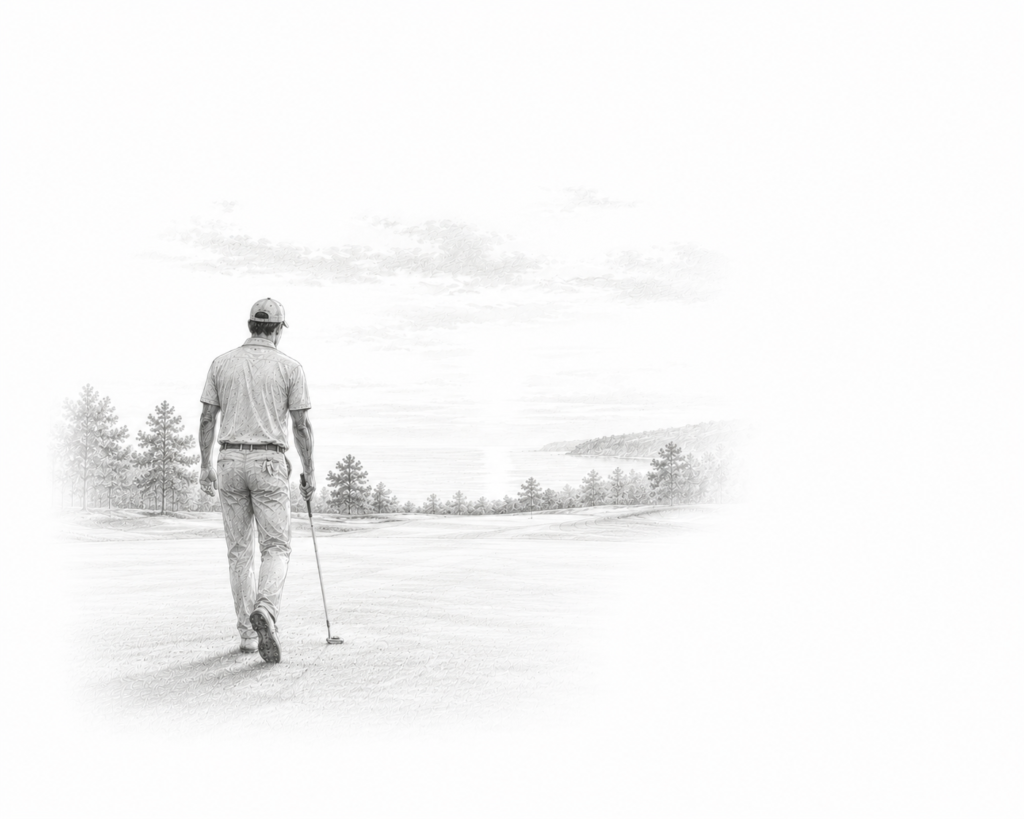
Nobody tells you exactly when it starts. There’s no single round where you tee off young and finish old — it happens in increments too small to notice individually, and then one day you’re standing on a tee box doing the same pre-shot routine you’ve done for thirty years and your body simply declines to follow through the way it always has, without any advance notice, without so much as an apology.
I used to be able to walk onto a course cold and hit a full drive on my very first swing. I don’t do that anymore. Now there’s a whole warm-up ritual that didn’t exist in my twenties — stretches, a longer runway before my back and shoulders agree to cooperate with what I’m asking of them, a quiet negotiation that happens every single morning before I’ve hit a single ball in anger. I stretch a hip flexor now that I couldn’t have found on a diagram twenty years ago, and some mornings it answers back with a stiffness that has nothing to do with golf and everything to do with the years golf has quietly been keeping score of anyway. The turn that used to arrive automatically, the one my body simply did without my having to think about it, now has to be coaxed into showing up, and some mornings it doesn’t show up at all, and I have to play around it instead of through it.
The strange part isn’t the decline itself. Athletes decline; that’s not news, and I was never good enough at this game for anyone to mourn a few lost yards off the tee. The strange part is what the decline does to the fight I’ve been having with my swing since I was young. The Big Right Miss is still there — it never left, it was never going to leave, that much I already knew — but it’s changed shape slightly, the way an old opponent changes shape over the years without ever stopping being the same opponent. It used to come from too much aggression, too much young, impatient hip and shoulder trying to out-muscle a golf ball that hadn’t asked to be out-muscled. Now it sometimes comes from the opposite direction entirely — from a body that’s slightly more cautious than it used to be, protecting itself in ways it didn’t used to need to, and that caution has its own way of getting the club stuck in the exact place the old aggression used to get it stuck.
I’ve had to relearn the same swing flaw twice now, from two different bodies, at two different ages, and both times it felt like starting over completely, even though it was, underneath everything, the same fight I’ve always been having. That’s the part that finally taught me something. I used to think I was chasing a fixed target — a perfect swing that existed somewhere out there, waiting for me to finally arrive at it if I just worked hard enough, long enough. I don’t think that anymore. The target moves. It has to move, because I’m not the same person swinging at it that I was ten years ago, or thirty. The challenge was never a problem to be solved once. It was always going to be a conversation that changes every few years, with a body that keeps changing the terms without asking me first.
There’s a version of this that could read as loss, and some days it genuinely feels like one — a specific, quiet grief for twenty extra yards I used to have and don’t anymore, for a flexibility I didn’t know to appreciate while I still had it. But there’s another way to feel about it, and most days, if I’m being honest, it’s the one that actually wins out: I’m still having the same argument I started having at seven years old on a mountain course with a cut-down 7-iron, and the fact that the argument has had to change shape twice now isn’t proof that I lost it. It’s proof I’m still in it. Golf never once offered me an ending. It only ever offered me another version of the same fight, for as long as I’m still willing to show up for it.
I think about the Big Right Miss the same way I think about that blind tee shot, the same way I think about a ten-foot putt on a Saturday afternoon with nothing real on the line — not as four different problems, but as the same problem wearing four different disguises, showing up wherever I happen to be standing. In my body, it’s a swing that’s never once been fully mine. On that course, it’s a hole that’s beaten me for fifteen years and will likely beat me for fifteen more. Among eleven friends, it’s a version of pressure I built myself out of nothing but caring too much for too long. In my own aging body, it’s an opponent that keeps changing its methods without ever once losing interest in the fight.
Different shapes. Same challenge, and the same answer underneath every version of it: I was never going to finish this. Not the swing, not the hole, not the tournament, not the slow renegotiation age keeps forcing on me. I used to think that was the bad news. I’ve come to think it’s the entire reason I’m still standing on tee boxes at all.
A game you could actually solve wouldn’t need you back tomorrow. It would give you what you came for, once, completely, and let you move on to something else — the way most things in life work, the way most things are designed to work, problems that exist to be closed. Golf was never built that way, and I don’t think that’s an accident, or a flaw somebody forgot to fix. I think it’s the whole design.
The swing that won’t stay fixed, the hole that won’t stop winning, the pressure we invent out of nothing but affection, the body that keeps changing the rules on us without asking — none of it was ever standing between me and the game I love. All of it, every frustrating piece of it, was the game I love, wearing different clothes depending on the day.
FIELD NOTES
I’ve spent thirty years chasing a feeling I can’t see and can only barely describe, on a hole that’s beaten me more than any other place on earth, in front of eleven men who’ve watched every version of my swing rise and fall, in a body that keeps quietly renegotiating the terms without asking my permission first. I haven’t solved any of it. I’m not going to. And somewhere in the last few years, without quite noticing when it happened, I stopped wanting to. The challenge was never standing between me and the game I loved. It turns out it was the reason I loved it — the whole time, since I was seven years old, watching a golf ball hang against an impossible sky, already falling for something I was never going to fully catch.
This is the second essay in Why We Play, a series about why we fell in love with this game in the first place. Start with Joy, then continue with Patience. More essays are coming soon.